Craniosacral Therapy
We offer both biodynamic and biomechanical (structural) craniosacral therapy.
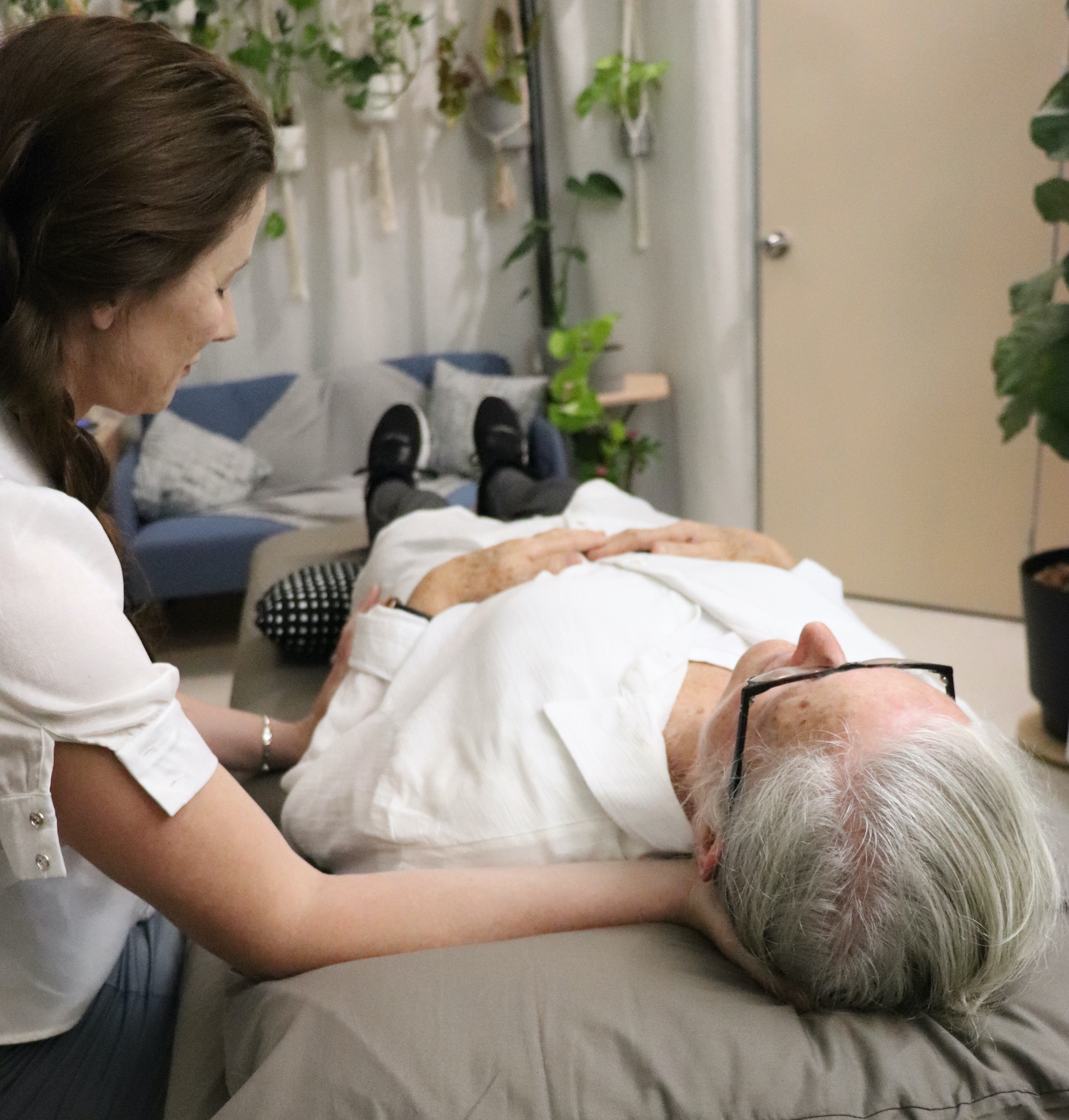
Biodynamic craniosacral therapy uses a gentle, intuitive approach grounded in a biodynamic understanding of health and the craniosacral system. Very light touch (five grams of pressure), presence, and deep listening to subtle internal dynamics allow the practitioner to facilitate the body’s innate organizing and self-healing forces. This supports the nervous system’s ability to recognize the present moment and helps release patterns of tension or trauma.
Biodynamics views health as an ever-present, dynamic living intelligence that is capable of relationship, timing, and interaction with the whole human organism, and it persists even in states of imbalance. In a biodynamic craniosacral therapy session, the practitioner perceives and orients to this inherent health field, seeking to create and support conditions in which health can express itself more fully.
In biodynamic craniosacral therapy, the practitioner follows where the body’s own organizing processes lead, trusting that the body’s internal wisdom can guide healing. This creates a therapeutic field of safety and presence, often allowing the autonomic nervous system to shift toward rest, repair, and regulation.
Biomechanical craniosacral therapy uses a gentle, hands-on approach grounded in an anatomical and biomechanical understanding of the craniosacral system. Light, skilled directive touch and precise palpation are used to assess and influence the movement of the cranial bones, membranes, sacrum, and cerebrospinal fluid, with the aim of restoring optimal structural relationships and motion. This supports efficient neurological function and helps relieve patterns of strain, restriction, or pain.
The biomechanical model views health as dependent on balanced structure and the free mobility of tissues within the craniosacral system. Restrictions in motion that may arise from injury, stress, developmental forces, or illness are understood to disrupt normal physiological processes. In a biomechanical craniosacral therapy session, the practitioner identifies areas of reduced movement or imbalance and applies specific manual techniques to encourage correction and improved mechanical function.
In biomechanical craniosacral therapy, the practitioner actively engages the tissues to support change, using anatomical knowledge and palpatory skill to guide the system toward greater alignment and mobility. This active engagement supports the nervous system’s capacity for integration and regulation, helping the body move toward greater ease, stability, and functional coherence.